Logistics consulting is a professional service, not a product on a shelf. A consultant looks at how goods, information and inventory move through a business, then recommends changes to cut cost, reduce delay and support growth. For businesses handling temperature-sensitive freight, cold chain logistics adds a further layer of technical detail that few generalist consultants cover in real depth.
What Logistics Consulting Actually Covers
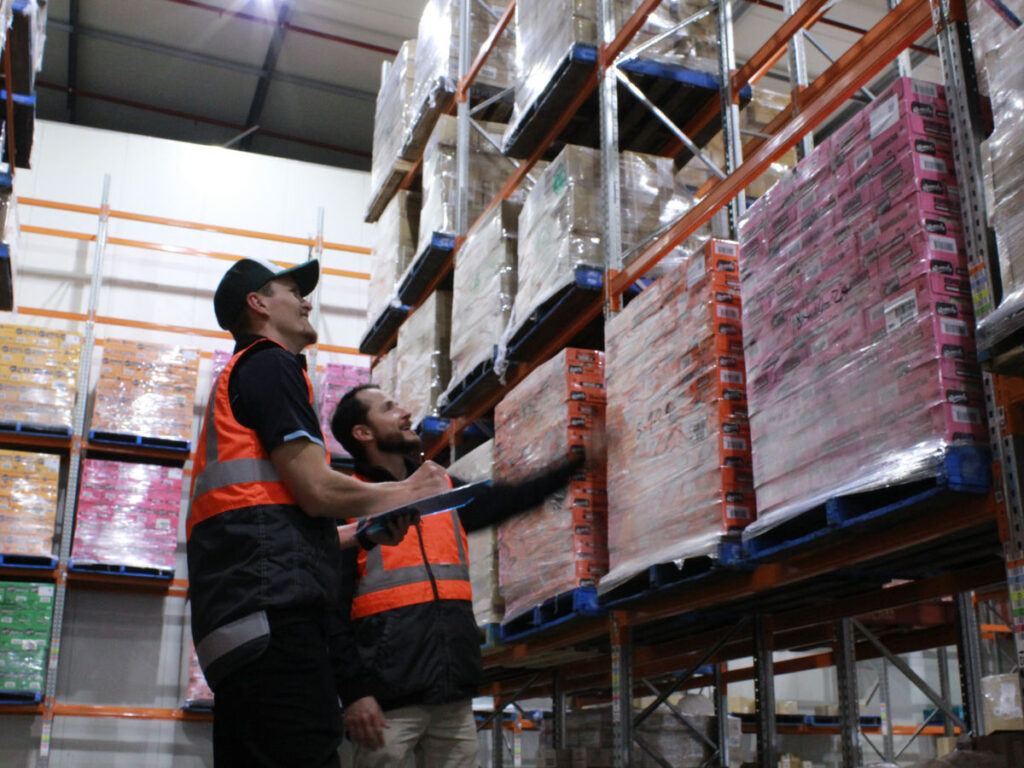
A logistics consultant works one step removed from the daily running of freight, inventory and warehousing. They don’t drive the trucks or pick the stock. They assess the system around it, and typically help businesses by:
- Reviewing current supply chain processes
- Identifying delays and inefficiencies
- Recommending transport or warehousing changes
- Supporting technology adoption, such as tracking or automation
- Mapping the logistics flow end to end
The work sits above day-to-day operations, not inside them. In practice, this usually comes down to a handful of numbers: cost per pallet or order, on-time-in-full delivery rate, warehouse throughput, and how often exceptions like damages, shortages or temperature excursions occur.
Why Australian Businesses Bring One In
Freight costs have climbed across Australia in recent years, and supply chains that once ran on manual processes and spreadsheets are under pressure to modernise. Businesses in Sydney, Melbourne, Brisbane and Perth turn to logistics consultants for a handful of specific reasons: to cut fuel and storage costs, to expand into new regions without adding overhead, to recover faster when something goes wrong, and to meet compliance requirements for regulated freight.
A consultant brings an outside view. They’ve seen how other freight networks are structured, what tends to break down, and which fixes actually hold up once the pressure is back on. Their real value is working alongside the existing team: taking a fresh look at lanes, costs and workflows the business is too close to see clearly, then putting a number on the trade-offs between cost, service and risk so there’s an actual plan to execute, not just a diagnosis.
Where Cold Chain Logistics Fits In
Cold chain logistics is the transport and storage of temperature-sensitive goods: food, medicine, certain chemicals. A short deviation from the required range can spoil an entire shipment, and there’s rarely a way to reverse that once it’s happened.
Consultants who specialise in this area typically:
- Assess cold storage capacity and temperature control systems
- Recommend packaging that actually holds temperature
- Identify the points in a cold chain where heat exposure is most likely
- Check compliance against food safety or pharmaceutical standards
- Help select the right cold chain carrier or 3PL partner
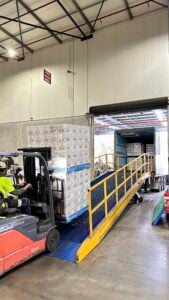
The failure points a specialist looks for are usually specific rather than general: staging time at the dock where product sits exposed with doors open, waiting time during cross-dock handovers, mixed-temperature loads or incorrect setpoints, blocked pallet airflow from over-wrapping, and gaps in temperature traceability that make it hard to prove what happened if something goes wrong.
Australia’s distances make this harder than in most comparable markets. A gap in the cold chain on a regional NSW or WA route can mean hours of heat exposure, not minutes, so the systems around it need to be right the first time.
Signs It Might Be Time to Bring One In
A few situations tend to prompt businesses to look for outside help:
- Expanding into new regions or scaling operations
- Freight or storage costs that don’t add up, without a clear reason why
- Repeated delivery delays or customer complaints
- Introducing temperature-sensitive products into the supply chain for the first time
- New industry or government compliance requirements
- Wanting to adopt new logistics technology without knowing where to start
What to Look For in a Consultant
Location matters less than experience. A consultant based in Adelaide can review a freight network in Darwin without setting foot there, provided the fundamentals are solid: hands-on experience in warehousing, freight and distribution, the ability to turn data into a clear recommendation, familiarity with Australian compliance requirements, and a track record with results that can actually be checked.
Ask whether they’ve worked in the industry before, whether they offer hands-on support alongside the analysis, and whether they can point to a specific result from a past client rather than a general pitch. A short discovery call usually settles it. If the business handles temperature-sensitive freight, ask directly whether cold chain is something they’ve actually worked on, not just something they’ll research once engaged.
Consultant, Operator, or Both?
Not every business that thinks it needs a consultant actually does. Some already know what’s wrong and need the transport, storage and technology to fix it, rather than another report confirming the problem. A consultant earns their fee when the issue is the strategy itself: network design, cost structure, technology selection. When the issue is capacity and execution, the faster route is usually a 3PL or cold chain partner that’s already built and compliant.
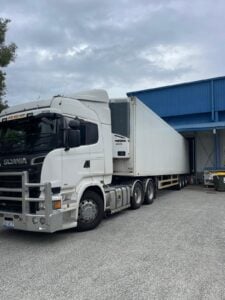
Icelander works with businesses in that second group: those who need transport, storage, container handling, pick and pack or 3PL support already in place, rather than a strategy document to implement themselves. Some of those conversations turn out to be about general freight and warehousing. Others, particularly where temperature-sensitive goods are involved, turn into a cold chain conversation, which happens to be where the team has the deepest experience.
Either way, a short conversation is usually enough to work out which one applies.
Ready to streamline your logistics? Get in touch with Icelander today to talk through what your supply chain actually needs.